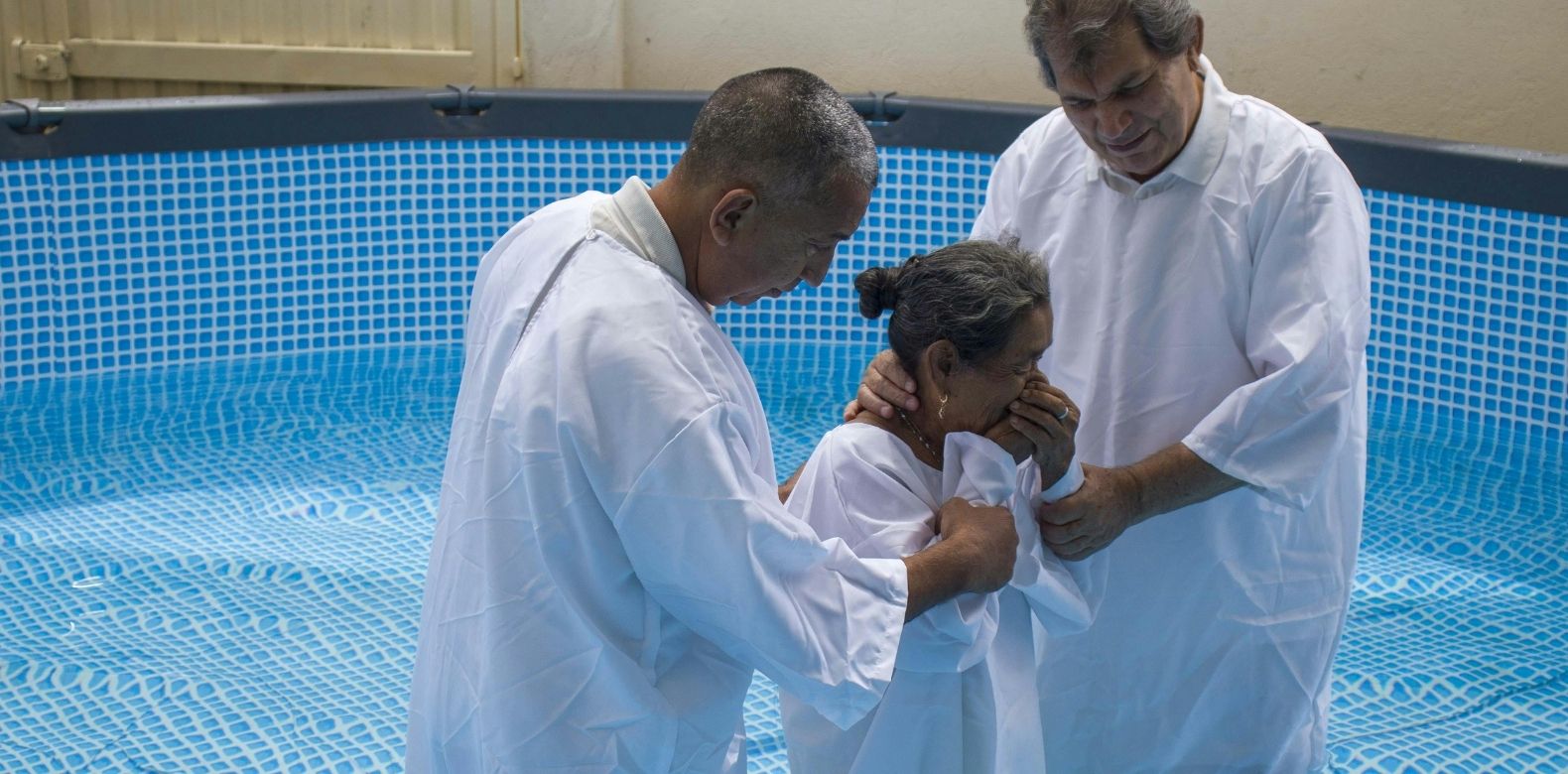
Leaving Our Old Life Behind through Baptism
August 15, 2026

Let God’s Word inspire and guide your journey each day.
Jesus Drank the Cup of Wrath So We Could Drink the Cup of Purpose
When Peter drew his sword to prevent Jesus from being arrested, Jesus responded, "Shall I not drink the cup which My Father has given Me?" (John 18:11). Jesus recognized that the suffering before Him was not an accident but the Father's assignment. He willingly embraced the cup because He knew the One who had given it.
The Bible uses the metaphor of a cup to represent different spiritual realities.
The Cup of the New Covenant (Matthew 26:27-28; Luke 22:20)
The Cup of Salvation (Psalm 116:13)
The Cup of Consolation (Jeremiah 16:7)
The Cup of Blessing (Psalm 23:5)
The Cup of Abomination and Wickedness (Revelation 17:4; Matthew 23:25)
The Cup of Demons (1 Corinthians 10:21)
The Cup of Destiny or Human Fate (Psalm 16:5)
The focus of John 18:11 is the cup Jesus received from the Father. Because of God's wrath against sin, Jesus, the Son of the living God, was given the assignment to die on the cross so that through His blood the world would receive salvation and redemption. His cup involved suffering and pain, yet its purpose was salvation.
Peter, however, tried to stop Jesus from being arrested. Although his intention was to protect the Lord, he did not understand the Father's purpose. Every cup approved by God has a unique purpose. We are called to embrace the cup He gives, willingly submit to Him, and trust that He brings good from it. As Scripture says, "And we know that all things work together for good to those who love God, to those who are the called according to His purpose." (Romans 8:28).
Jesus did not hesitate to submit to the Father's will. He surrendered Himself to those who would humiliate Him and crucify Him because He trusted the Father completely.
Peter presents a different picture. He was the first disciple called by Jesus (Matthew 4:18-20). The Father revealed to him that Jesus is the Christ, the Son of the living God (Matthew 16:16-17). He witnessed the Mount of Transfiguration (Matthew 17:1-9), and Jesus declared, "You are Peter, and on this rock I will build My church." (Matthew 16:18). Yet in the garden Peter acted in the flesh. Although he loved the Lord and even followed Him after His arrest to the high priest's courtyard (John 18:15), he relied on his own strength.
While Jesus was with the disciples, Peter boldly drew his sword and cut off the servant's ear (John 18:10). But after Jesus was taken into custody, Peter became fearful and denied the Lord three times (John 18:17, 25-27). Jesus had a cup to drink in order to fulfill God's purpose for salvation. Peter also had a cup to drink, but at that moment he failed to drink it boldly.
The difference was not courage but trust. Jesus was able to drink His cup because He knew who had sent Him and trusted the Father's authority over everything. He declared, "No one takes it from Me, but I lay it down of Myself. I have power to lay it down, and I have power to take it again." (John 10:18). Yet He did not exercise that authority to avoid the cross. Instead, He submitted Himself to the Father's will. Because He submitted, He was raised on the third day and glorified with the Father (John 17:5; Luke 24:6-7).
Peter's sword in the garden revealed the limits of human strength. Acting in the flesh, he depended on worldly weapons and immediate visible results. After he received the Holy Spirit, his ministry became completely different (Acts 2). The fear that led him to deny Jesus was replaced with boldness. Peter eventually embraced his own cup, just as Jesus had foretold (John 21:18-19).
Jesus drank the cup of the Father's wrath against sin so that those who belong to Him would never drink that cup. Those who are in Christ are new creations (2 Corinthians 5:17). Therefore, the cups approved by God for His sons are not cups of wrath but cups of purpose. They are approved by Him to refine us, fulfill His purpose through us, produce perseverance, character, and hope (Romans 5:3-5), and ultimately lead us to be glorified with the Father, just as Jesus was glorified with the Father (Romans 8:17).
SOW THIS WORD INTO YOUR SOUL